top of page

KINDERGATEN READINESS
PROGRAM


Our Kindergarten-Ready Focus
At Skills for Life Child Care, we believe each child is strong, capable, and full of potential. We help children build the confidence, independence, and sense of belonging they need for a successful start to kindergarten.
Our program aligns with the BC Early Learning Framework and School District 62 goals, supporting each child’s social, emotional, and cognitive growth through hands-on experiences, meaningful routines, and thoughtful play.
-
Belonging: Children feel seen, valued, and part of a community where their ideas matter.
-
Well-Being: We nurture comfort, curiosity, and resilience through a balance of calm routines and playful challenge.
-
Engagement: Children explore with their senses, materials, peers, and bodies — building early literacy, numeracy, and problem-solving naturally through their environment.
-
Connection: We guide children to notice patterns, ask questions, and reflect on what they see — linking play to the big ideas of learning, culture, and community.
Building Independence for Kindergarten


Kindergarten readiness is about more than ABCs and 123s — it’s about confidence in everyday routines. At Skills for Life Child Care, we help children build the real-world skills that make the transition to school smooth, positive, and full of pride — in partnership with families and caregivers.
Self-Care & Routines Children will learn:
Wash their hands with soap and water before meals and after play
Use the bathroom independently, including flushing and hand-drying
Open and manage their own lunch boxes and containers during meal times
Responsibility & Organization
Our daily rhythm encourages children to:
Put on and take off their own shoes and coats
Pack and unpack their backpacks, making sure water bottles and lunch kits go where they belong
Stack chairs and tidy their play spaces, learning that being part of a group means taking care of our shared environment
Confidence in Daily Tasks
We start these skills with small, achievable tasks that children build on over time — stacking chairs, zipping coats, or opening their own lunch containers. Each success helps create confidence and independence while keeping learning fun and meaningful. These everyday moments prepare children to enter kindergarten feeling capable, proud, and ready to take on new challenges.
Planning Playtime – Learning Through Purposeful Play


At Skills for Life Child Care, learning begins with play — real, meaningful play that builds a love for discovery. Our Planning Playtime approach blends guided activities with open-ended exploration, creating endless opportunities for children to imagine, experiment, and learn through doing.
Each week, we introduce themes that naturally connect to early literacy, math, science, and art. Children might trace letters in sand, use letter magnets or toys before writing them on paper, count toy vegetables before matching numbers on a page, or draw what they observe after a hands-on science activity. Every playful task is designed to build the foundational skills they’ll need for kindergarten — from pencil grip and number sense to focus, curiosity, and problem-solving.
We use planning playtime worksheets as gentle extensions of hands-on learning — not as busywork, but as tools that connect real-world experiences to early academic concepts. After mixing colors in water play, children might circle matching shades on a color chart. After sorting nature treasures, they might practice patterns and shapes on a worksheet. These moments help children make meaningful links between what they play and what they know.
Our goal is for every child to leave feeling capable, curious, and confident — ready for kindergarten and excited about learning.
Sensory Exploration
Every Season

At Skills for Life Child Care, learning often starts with what children can see, touch, smell, and hear. Our sensory play invitations change with the seasons — scooping oats and pinecones in autumn, exploring melting ice and petals in spring, or sifting shells and sand in summer.
Each bin or station is thoughtfully designed to support real learning goals such as fine-motor control, early math, and language development. As children pour, scoop, and sort, they’re strengthening their fingers for writing, comparing quantities, and describing textures — all while having fun.
Sensory play also helps children self-regulate and focus. The soft sound of pouring rice or the cool feel of water helps them calm their bodies and center their attention — valuable skills for both play and classroom learning.
Hands-On Approach
Everyday Learning

We believe children learn best by doing.
Our classroom is filled with real materials and meaningful tasks that connect learning to life — watering the garden, feeding the chickens, mixing muffin batter, or measuring seeds for planting.
These moments spark curiosity and teach early math, science, and social skills in ways that feel natural. When children pour, scoop, build, and share, they’re practicing counting, sequencing, problem-solving, and cooperation — all while building real-world skills through meaningful play.
Hands-on learning builds confidence and independence. Whether it’s tying an apron before baking or noticing how plants change in the garden, every experience encourages children to ask questions, take pride in their work, and see themselves as capable learners.


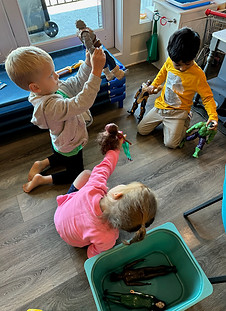


Cultivating Emotional Intelligence Communication Skills
At Skills for Life Child Care, we recognize that readiness for school begins with readiness for relationships. Drawing on principles of developmental play-based learning and play therapy, our program supports the growth of each child’s emotional awareness, communication skills, and capacity for empathy.
Play is how children process the world — it’s their natural language for exploring thoughts, feelings, and relationships. Through play, conversation, and gentle modeling, we help children learn to recognize emotions in themselves and others, and to respond with understanding and care.
Understanding Emotions & Tone
Children learn to notice the cues that tell us how others might be feeling — the sound of a happy voice, a quiet tone when someone is sad, or a louder tone when someone feels upset. We explore how everyone experiences many different feelings and that all emotions are normal. What matters most is how we respond — learning to pause, take a breath, and choose a caring action when big feelings arise.
Regulation & Resilience
We teach children to listen to their bodies and recognize signs of emotion: a quick heartbeat, warm cheeks, or crossed arms might mean they need a break. We offer calm strategies — breathing, movement, quiet space, or connecting with a trusted adult — to help them regulate and feel safe again. These skills build the foundation for self-awareness, self-regulation, and confidence in navigating daily challenges.
Communication, Consent & Connection
Through guided play and conversation, children practice using words to express needs and set boundaries respectfully: “I’d like a turn when you’re done, please,” or “I need some space right now.” They learn that it’s okay to say no, to check in before touching or hugging, and to respect others’ choices — building an early understanding of consent and mutual respect.
We also talk often about kindness and perspective-taking — learning to think of others as we hope they think of us:
“You think of me, and I’ll think of you.”
This shared philosophy helps children develop empathy, community, and compassion, creating a space where we all support one another through our difficulties and our wins.
Mistakes & Growth
We remind children that mistakes are part of learning — and that what matters is how we turn it around. Whether a spilled cup of water, a misunderstanding with a friend, or a moment of frustration, we guide children to reflect, make amends, and try again. These experiences teach accountability, perseverance, and courage — essential skills for life and learning.
Asking for Help & Building Courage
When children feel overwhelmed, we model that it’s always okay to ask for help. Gentle encouragement and consistent support show them that courage doesn’t mean doing everything alone — it means trusting others and believing in their ability to try again. Over time, this approach nurtures children who feel confident, compassionate, and emotionally ready to thrive in group settings and beyond.
Cultural Connection & Family Beliefs

At Skills for Life Child Care, we know that each child brings a unique story — rooted in family traditions, languages, and life experiences. We actively honour and integrate these stories into our program, reflecting research-based practice which highlights that children learn best when their identities are affirmed, and when they see themselves and others represented in everyday learning.
We welcome families to share their traditions — whether it’s baking a family recipe, celebrating a holiday with a craft, or teaching a few words in another language. These contributions are integrated in age-appropriate ways, gently woven into our classroom routines so that children always feel included, valued, and supported — regardless of how much they choose to participate.
We celebrate these moments lightly and with sensitivity to each family’s comfort level. We know some families may feel cautious about cultural sharing, and we honour that too — creating a flexible, safe space where participation is always a choice.
We also teach that it’s okay to have differences — we may not all look the same, believe the same, or celebrate the same way, and that’s what makes our community stronger. What matters most is how we care for and support one another. At our centre, children learn early that they belong, that we are kind, and that we think of each other:
“You think of me, and I’ll think of you.”
Through this shared understanding, children learn that kindness means noticing when others need help, offering comfort, celebrating successes together, and standing beside friends through both challenges and wins.
When children see that their own culture is valued — and they also learn to value the culture and creativity of others — they grow into confident, compassionate learners who understand that being unique brings empowerment, understanding, and colour to our community. Together, we create a place where differences don’t divide us — they add beauty, interest, and inspiration to our shared story.
Supporting Every Child’s Unique Path

Every child learns in their own way and at their own pace. At Skills for Life Child Care, we celebrate those differences by adapting our environment, materials, and guidance to support each child’s unique needs. We take time to observe and listen, noticing what sparks curiosity, where a child might hesitate, and how small adjustments can turn challenges into opportunities.
When difficulties arise, we respond with empathy and gentle, gradual support. Strategies are introduced softly and consistently, helping children work through challenges while feeling safe and understood. Over time, these experiences do more than solve a momentary difficulty — they build courage, resilience, and the confidence to take on new and harder tasks.
By nurturing each child’s individual rhythm and providing compassionate support, we help them grow into curious, capable learners who feel proud of every step they take toward independence and school readiness.
bottom of page